When a City Marches, a Band Leads
How Compton High’s Marching Band carried MLK Day from reflection at the breakfast to purpose in the streets
By Dr. Marie Y. Lemelle, MBA, PhD
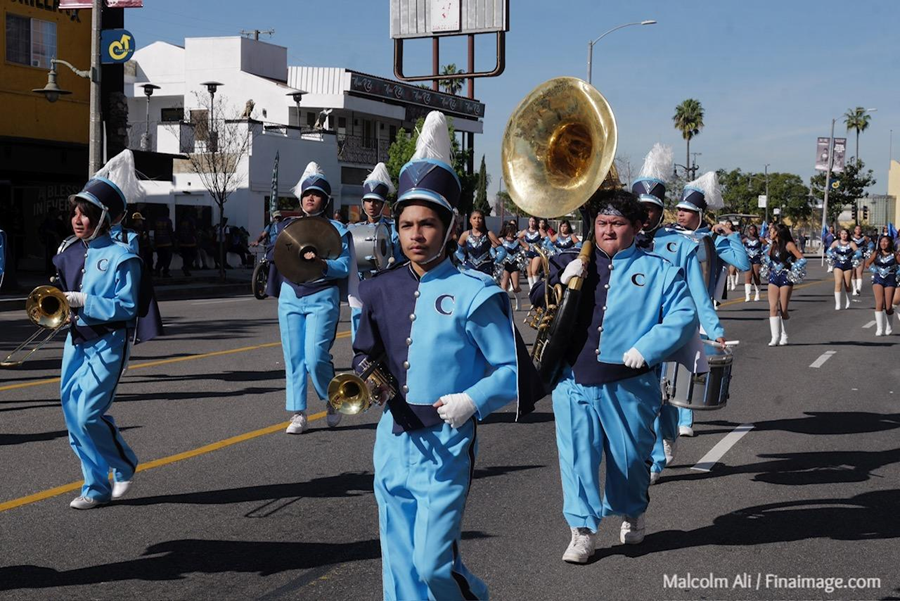
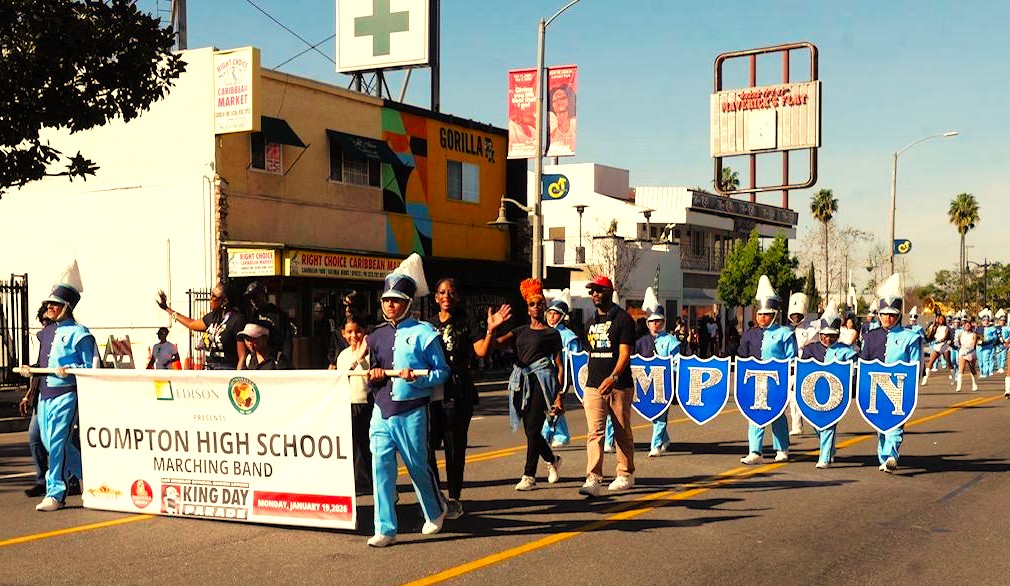
During the 2026–2027 school year, auditions held in February drew more than 150 scholars for dance, tall flags, and drill team, while over 100 freshmen signed up for Compton High Marching Band, the largest participation in more than 28 years. Photo: Malcolm Ali/Finaimage.com
On January 19, 2026, South Los Angeles woke up early—like it does when the moment matters.
Before the Martin Luther King Jr. Day Parade stepped off at 10 a.m., the Crenshaw District was already in motion. Folding chairs lined the sidewalks. Families bundled up in layers until the sunshine warmed them. Elders greeted neighbors by name. There was a quiet understanding in the air: MLK Day is not just a tradition. It is a civic checkpoint—an annual reminder that history is alive, and responsibility is shared.
That tone was set first at the pre-parade MLK Breakfast, where labor leaders, community advocates, and public officials gathered before heading to the route. As buses lined up and elected officials assembled—city councilmembers, members of Congress, state legislators, county supervisors, labor leaders, and school board representatives—the message was clear: Dr. King’s legacy remains unfinished work.
Hosted by the LA Sentinel and Bakewell Media, and led by Grand Marshal Cedric the Entertainer, the MLK Day Parade remains one of the largest and most significant commemorations of Dr. King’s legacy in the nation. Cedric, a multiple NAACP Image Award winner, Gotham Award recipient, and holder of a star on the Hollywood Walk of Fame, framed the day with urgency rather than nostalgia.
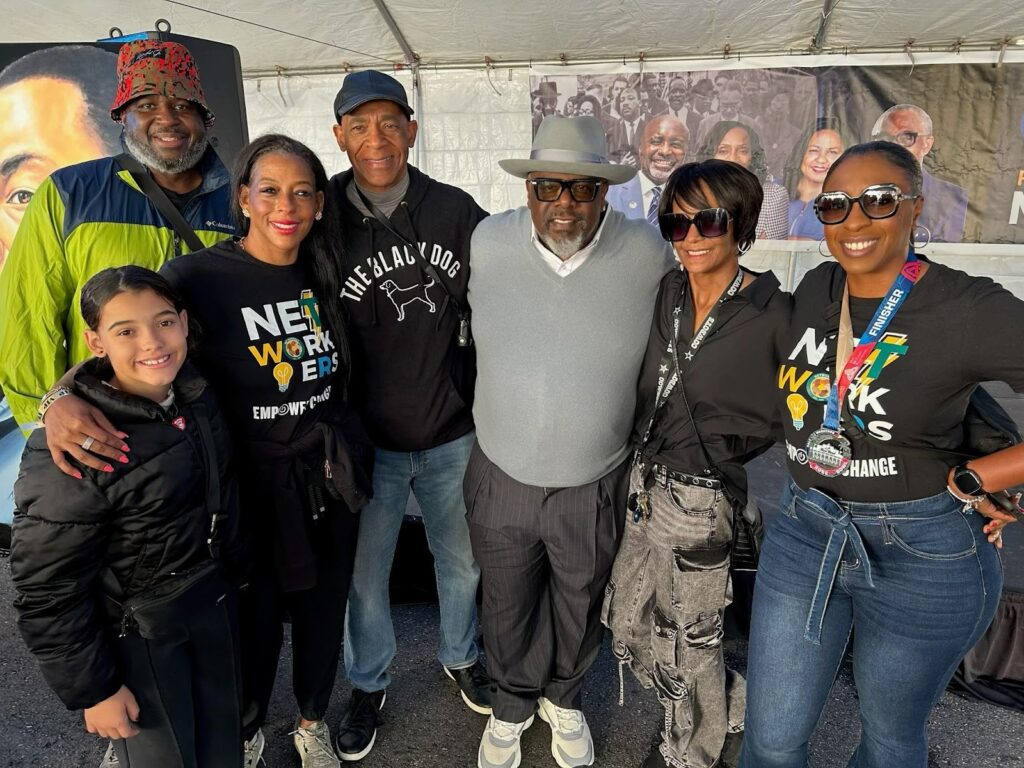
“It is an honor to be here on this day to represent Dr. King and the work,” Cedric said. “The fight for justice and the fight for equality are still happening. These things are under attack right now, as we speak.”
As the parade moved through South Los Angeles, faith leaders, youth organizations, labor unions, marching bands, and civic institutions advanced together in shared purpose. Among them was the Compton High School Marching Band, representing not only a school, but an entire city.
As the band entered the route, applause followed—sustained and intentional. It was recognition of preparation, discipline, and the quiet authority of young people who understand that visibility carries meaning.
Marching alongside the students was David A. Ford, Government Relations Manager with Southern California Edison Local Public Affairs. Watching from within the formation, he saw something deeper than performance.
“What you see is discipline and joy existing at the same time,” Ford said. “When you understand the economic and social realities many of these students navigate daily, their ability to show up unified, focused, and proud speaks volumes.”
In many ways, the band’s presence functioned like a moving headline: Compton continues. Not as a stereotype, not as a soundbite—but as a living city producing excellence, leadership, and pride.
Compton’s story has never been one-dimensional. Founded in 1888 and named after Griffith Dickenson Compton, who led settlers to the area in 1867, the city began as an agricultural hub built on fertile land and possibilities. Over generations, it evolved into a cultural engine whose influence reached far beyond Los Angeles County.
Globally, Compton is synonymous with musical innovation. As the birthplace of gangsta rap, the city reshaped hip-hop through artists like Dr. Dre, Ice Cube, and Eazy-E, forcing America to confront narratives often ignored. The city also produced world-class athletes—most notably Venus and Serena Williams—whose rise from Compton’s public courts to international dominance redefined excellence under pressure.
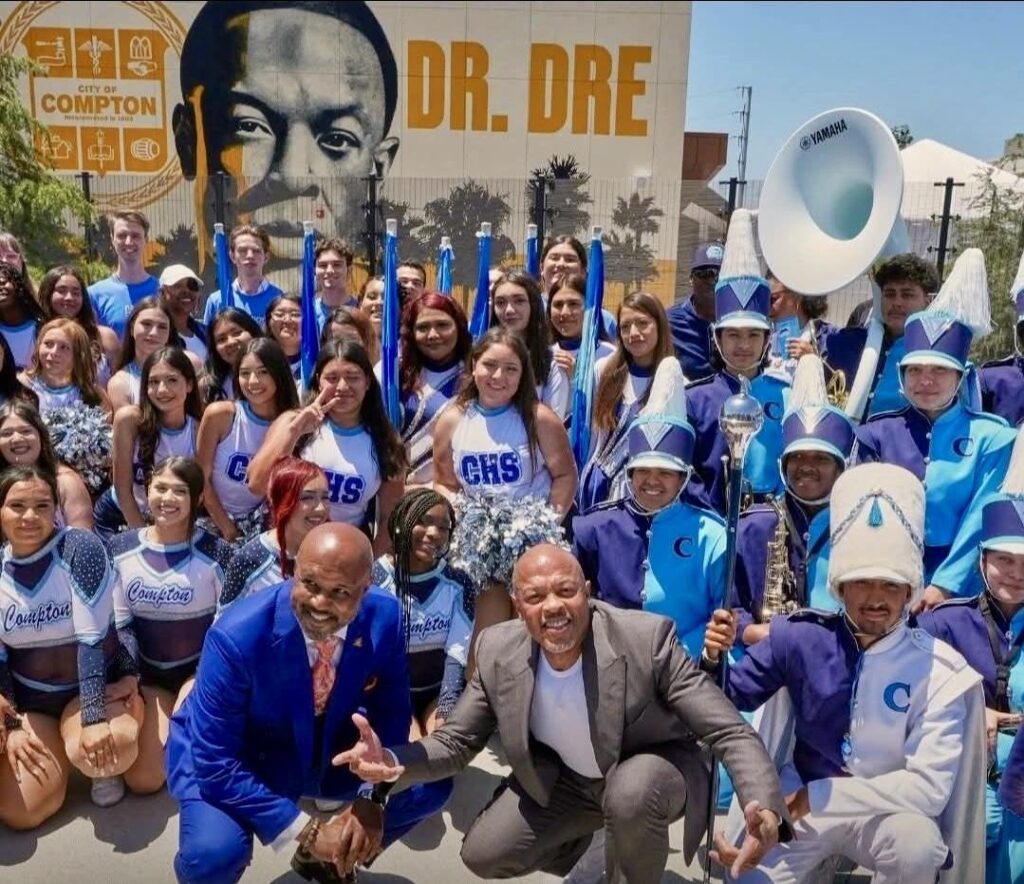
That lineage—grit, discipline, belief—continues today in places like the Compton High School Marching Band.
“In times when communities face uncertainty, institutions like the marching band become anchors,” Ford said. “For students, it’s structure and belonging. For the city, it’s a reminder that Compton continues to produce excellence.”
Leadership plays a central role in sustaining that momentum. The band is led by Anthony Ransfer, a graduate of Morehouse College, alongside assistant director Esteban Morelos. Their philosophy is anchored in the words of Dr. Benjamin E. Mays: “Not failure, but low aim is sin.” The message is clear: students are expected to strive boldly, supported by structure, mentorship, and unwavering belief.
“The foundation is love,” Ransfer said. “We create an environment where scholars feel supported, but also challenged to grow—musically, academically, and personally.”
Each summer, students participate in a six-week intensive program focused on independence, discipline, and accountability. Those habits extend beyond music and into academics and leadership.
Within that framework, the Compton High School Marching Band does more than teach music. It cultivates resilience, raises expectations, and offers young people a vision of what is possible when discipline meets opportunity—on the field, in the classroom, far beyond the city limits.
Participating in the MLK Day Parade is treated as a lesson in civic responsibility. “Dr. King sacrificed for change,” Ransfer said. “We talk about that history and what it means to carry it forward.”
Senior snare drummer and section leader Caleb Kemp felt that responsibility with every step. “Playing for three miles pushed me physically,” Kemp said. “But I stayed locked in and exceeded my own expectations.”
The band’s leadership structure mirrors real-world environments, with officers, librarians, section leaders, a drum major, and a band president. Alumni have attended UC and CSU campuses, Stanford University, USC Law School, Hampton University, Central State University, Morehouse College, and community colleges statewide.
Community and corporate partnerships help sustain the program’s momentum. Dr. Dre’s contribution helped create a state-of-the-art performing arts facility, while partnerships with Southern California Edison introduced students to career pathways and civic engagement.
Many of the band’s scholars come from single-parent households, foster and group homes, and immigrant families—backgrounds that reflect the lived reality of Compton itself.
The program’s vision extends well beyond the parade route. Among its benchmark goals are performances at the Macy’s Thanksgiving Day Parade in New York City and the Rose Bowl Parade in Pasadena, milestones that symbolize both excellence and national visibility. To guide students toward those ambitions, the program operates under a four-year theme that challenges every band member, dancer, drill team participant, and tall flag performer to “reach the mountaintop.”
That ascent is intentional. The program’s success is built on strong parent involvement, tough love, and consistency—a combination that reinforces accountability while affirming belief in each student’s potential.
As the parade concluded at Leimert Park, the Compton High School Marching Band had done more than complete a demanding route. They advanced a city’s story through discipline, unity, and presence.
Compton’s future is not waiting to be written. It is already in motion.
—
About the Author
Dr. Marie Y. Lemelle, MBA, PhD
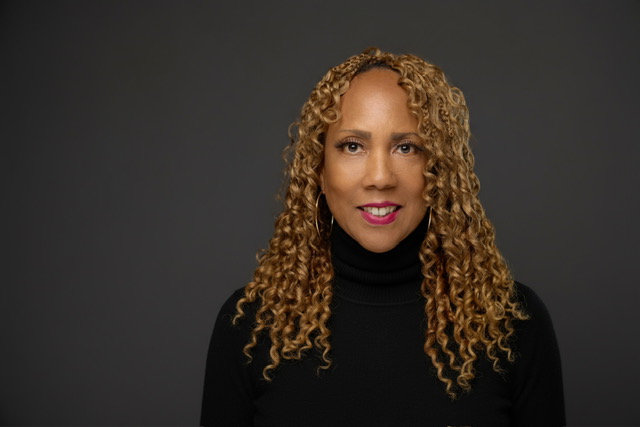
Dr. Marie Y. Lemelle is a humanitarian and award-winning journalist serving as President of the Beverly Hills Chapter of the Southern California Black Chamber of Commerce. Her work centers on civic leadership, community advocacy, and cultural storytelling across Los Angeles and beyond. Learn more at https://blackchamberofcommerce.org/beverly-hills/. Instagram: @platinumstarpr