
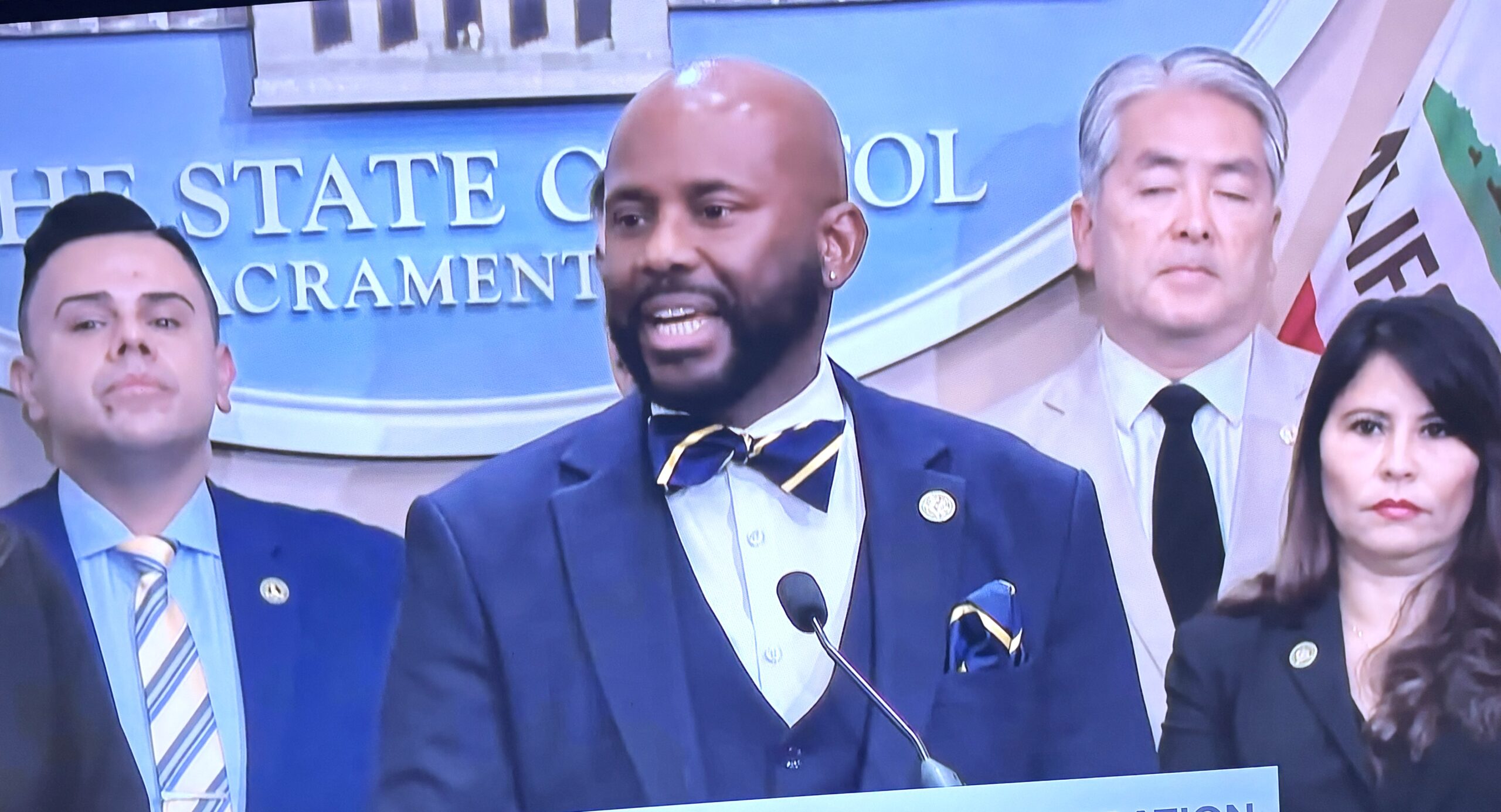
State Board of Equalization Candidate Mike Gipson walked out of his barber’s chair. Here’s why he told voters about it.
By Dr. Marie Y. Lemelle, MBA, PhD
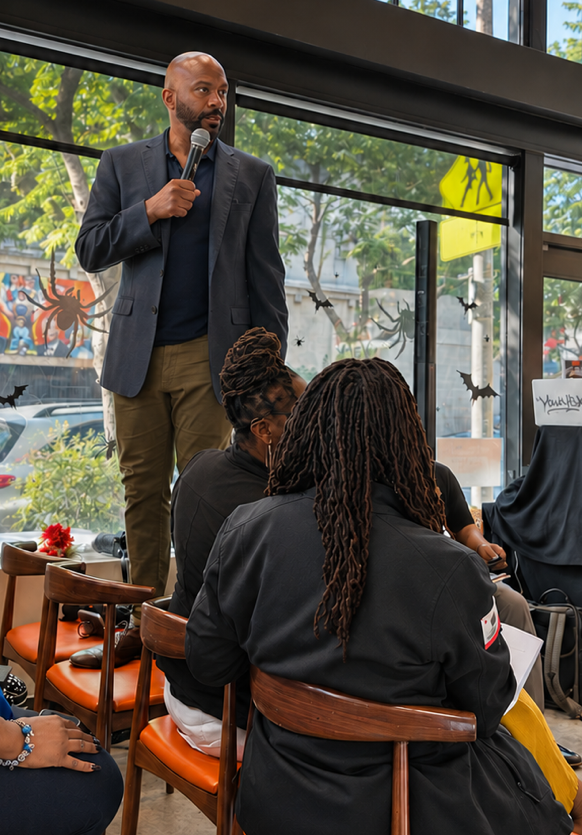
At the Black California Conversation in Los Angeles City Council District 9, Mike Gipson fired up the packed crowd about his barber in Carson, who got his beard lined up. As he often did when he came in, he asked who was registered to vote. The shop owner gave him an answer that ended the appointment.
“I’m registered to vote. I don’t vote.”
Gipson took off the barber cape and walked out. When the California assemblymember stood up on his chair, he made clear that he was prepared to take his business elsewhere. “It’s that serious for me,” he told the audience.
The story anchored Gipson’s argument against Proposition 39, the voter identification measure on California’s Nov. 3 ballot. Before he talked about what the measure could require of voters, he asked the audience to consider what happens when someone already registered decides to sit out an election. The exchange in Carson put that decision in a setting anyone in the room could recognize, between two people who knew each other well enough to speak plainly.
Why Gipson brought the barbershop into the debate
Gipson, who represents California’s 65th Assembly District and serves on the California Legislative Black Caucus, acknowledged that his own name was on the ballot. But the election he described reached well beyond his race. He invoked the history of poll taxes and literacy tests, recalling how those barriers were used to keep Black Americans from voting. He also spoke about immigration enforcement to explain why he saw voting as consequential for people whose families and neighbors were affected by government actions.
“I’m not going back,” Gipson said, repeating the words as he urged Black voters to turn out. He asked those in the room to reach out to young people eligible to vote and to help others get to the polls. To make the point, he joked about piling 10 people into a Volkswagen.
What Proposition 39 would change
California’s official voter guide says Proposition 39 would require voters to present government-issued identification when voting in person. Mail voters would have to write the last four digits of a designated government-issued identification number on the ballot envelope for the ballot to count. Supporters say the requirements would increase confidence in elections. Opponents argue that the measure would add barriers for eligible voters.
Gipson also urged people with past convictions to exercise their voting rights. California’s Secretary of State Shirley Weber says people on probation or parole can register and vote if they otherwise meet the state’s eligibility requirements. People serving a state or federal prison term for a felony conviction regain the right to vote after completing that term and must register.
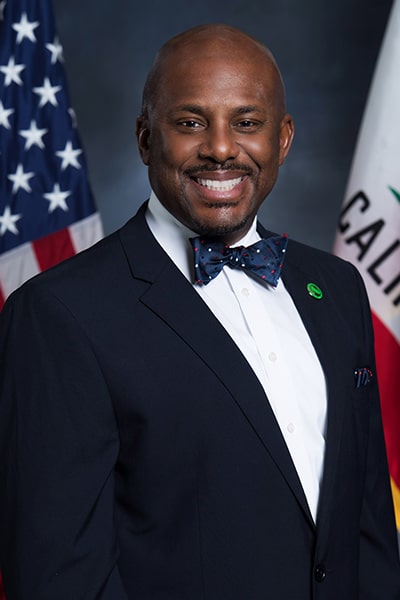
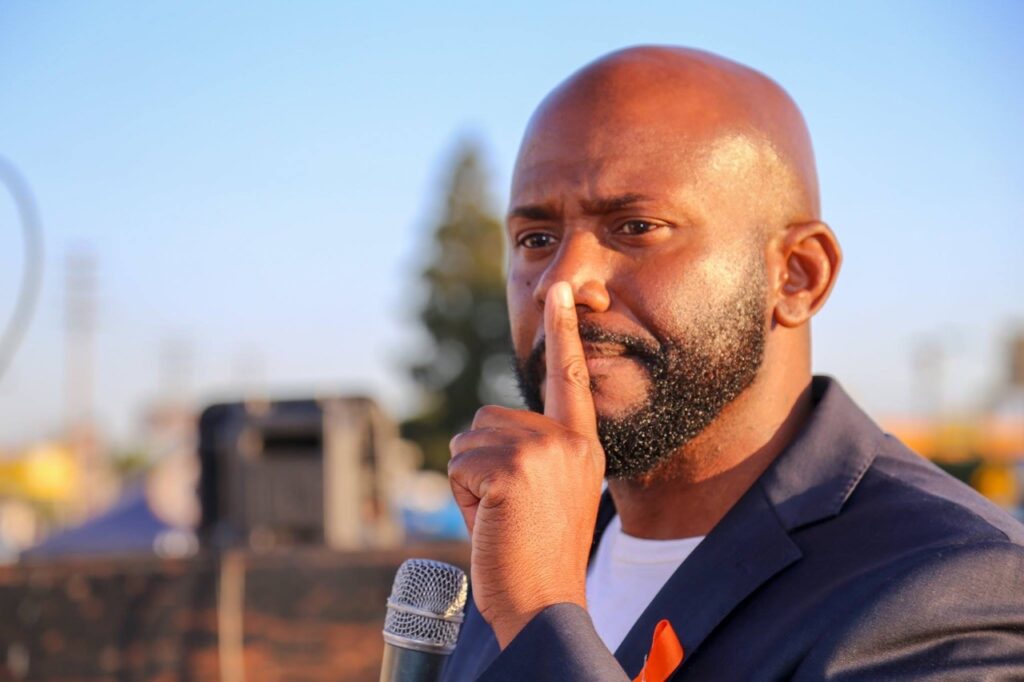
Later in the forum, a Los Angeles Unified School District representative described how the district teaches students about voting and helps eligible teenagers preregister. That work carries particular weight for Black Americans, whose right to vote was obstructed for generations by poll taxes, literacy tests, and intimidation. Those barriers are part of the history Mike Gipson invoked when he urged the audience to remember what earlier generations endured to cast a ballot.
Today, the rules voters must navigate vary from state to state. A voter who lacks the identification a state requires can face an extra step before a ballot counts. In California, Proposition 39 put that question directly before voters by proposing new identification requirements for both in-person and mail voting. Gipson’s barber brought the issue down to one conversation in Carson. He was already registered and told Gipson he didn’t vote. By telling that story at the forum, Gipson asked the audience to pay attention both to the rules that shape who can cast a ballot and to the decision each eligible voter makes about whether to use that right.
About the author
Dr. Marie Y. Lemelle, MBA, PhD, is the founder and CEO of Platinum Star Public Relations, co-founder of LMxML Brand Agency, and president of the Beverly Hills Chapter of the Southern California Black Chamber of Commerce. Follow Dr. Lemelle on Instagram at @platinumstarpr.